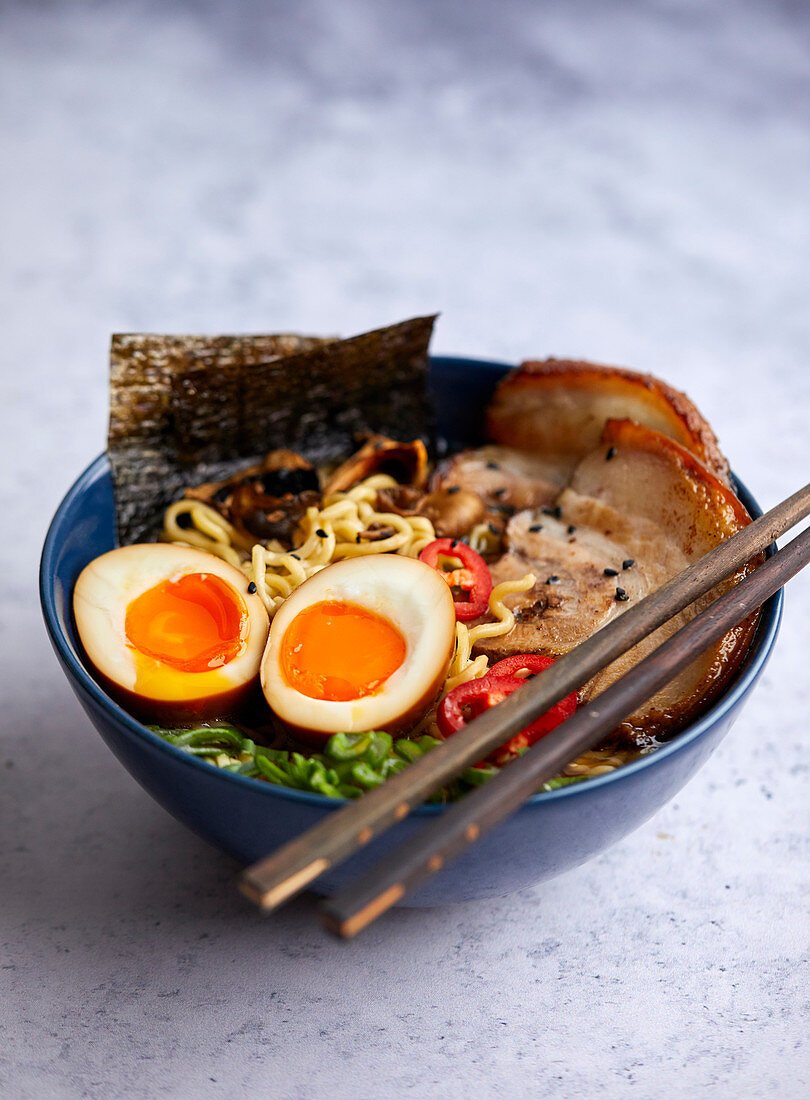

Ever sliced into an ajitama and wished it had a bit more savoury punch, or less salt? Ajitama are Japanese-style ramen eggs, soft-boiled eggs soaked in a soy-based marinade.
The tricky bit is the ajitama marinating time. Time changes the flavour and that brown “tea stain” colour on the white. The texture, though, mostly comes from how you cook the egg. Keep everything chilled, because these eggs need fridge time to be safe and tasty.
The short answer: best ajitama marinating times for most kitchens
Most home fridges and marinades land in these sweet spots:
| Marinating time | What you’ll get |
|---|---|
| 2 to 4 hours | Light flavour, pale colour, gentle salt |
| 6 to 12 hours | Balanced taste, clear colour ring, most “ramen shop” vibe |
| 12 to 24 hours | Strong soy hit, darker whites, saltier finish |
If you go past 24 hours, the whites often get much darker, and the salt can take over. Flip the eggs once halfway through (or turn the bag), which helps the colour come out even.
What you get at 2, 6, 12, and 24 hours
2 hours: A hint of soy on the outside, the yolk still tastes mostly like egg. Colour is light, with a faint ring.
6 hours: Noticeable savoury flavour, a neat tan ring around the yolk, and salt that doesn’t shout.
12 hours: Full flavour through the white, deeper colour, and a richer aroma when you slice it.
24 hours: Bold and salty, with very dark patches on the outside. Great for rice bowls, can overpower delicate broth.
When to stop: signs your eggs are over-marinated
Watch for these signs of over-marinated ajitama:
- Whites turn very dark brown
- A sharp salty bite that lingers
- Soy flavour drowns out the yolk
- Whites feel slightly rubbery (this can also mean they were overcooked)
Quick fix: shorten the next soak, dilute the marinade with water, or marinate for fewer hours, then rest the eggs in the fridge, out of the liquid.
What changes marinating time (and how to adjust)
A few things speed up (or slow down) how fast flavour moves in:
Egg size: Small eggs season faster, start at the lower end of the range.
Marinade saltiness: Stronger soy means faster results, so cut time.
Fridge temperature: Colder fridges slow things down, so add a couple of hours.
Peeling and coverage: Fully peeled and fully submerged eggs take on flavour more evenly.
Warm eggs absorb faster, but cool them quickly after boiling, and only marinate in the fridge.
Marinade strength: soy, mirin, sugar, and water ratios
More soy equals quicker, saltier ajitama. More water makes it gentler. Sugar rounds out the salt, and mirin adds soft sweetness.
An easy starting point: equal parts soy sauce and water, a spoon of sugar, plus a splash of mirin.
Egg doneness matters more than you think
That jammy centre comes from boiling time, not marinating time. Aim for about 6 to 7 minutes for a soft-boiled egg (size matters), then an ice bath to stop the cooking. Peel carefully; torn whites soak up too much marinade.
A simple method for consistent ajitama every time
- Soft-boil eggs, then ice bath.
- Peel, then pat dry.
- Add eggs to a zip bag (uses less liquid) or a small container.
- Pour in marinade, chill.
- Flip once.
- Slice and serve (ramen, rice bowls, salads, toast).
Food safety and storage (how long they keep)
Marinate in the fridge, keep covered, and use clean utensils. Eat within about 3 to 4 days. Reusing marinade is risky; if you do, boil it, let it cool fully, and then chill. However, fresh is best.
Conclusion
For most kitchens, 6 to 12 hours gives ajitama that balanced, savoury taste, while 12 to 24 hours suits anyone who wants it bolder. Pick your time based on how salty you like it, then change one thing at a time (time, soy strength, or egg doneness). Try marinating two eggs for different times, you’ll find your favourite fast.